Closets are no longer afterthoughts. A well-designed closet supports daily routines, reduces clutter, and brings a quiet sense of order to the way people live at home.
Closets used to be treated as secondary spaces. They were often planned after the bedroom, bathroom, kitchen, and main living areas had already been decided.
But that way of thinking no longer reflects how people live today. Closet design planning is no longer just about filling space. It is about shaping how a home supports daily life.
When a closet is treated as leftover space, clutter becomes the homeowner’s responsibility. When it is planned with intention, order becomes part of the architecture.
Closets Used to Be Leftover Space
For a long time, closets were expected to do one simple thing: hold what did not belong elsewhere.
The bedroom received the design attention. The kitchen received the planning conversation. The closet was often left to whatever space remained.
That approach no longer works for the way people live now. A poorly planned closet does not stay isolated. Over time, its clutter tends to spill into the rest of the home.
A better closet begins earlier in the design conversation.
Closets Shape the Rhythm of Daily Life
The value of a well-designed closet is often felt in small, repeated moments.
Finding what you need without searching. Putting something away without rearranging everything else. Keeping the bedroom from becoming an overflow zone.
These moments may seem minor, but they happen every day. That is why closet design should not begin with, “ How much can we fit? ” A better question is, “ How does this space support the way someone actually lives? ”
A closet should work with daily habits, not against them.
Morning
Getting ready with less friction.
Access
Finding what you need faster.
Reset
Putting things back with ease.
Calm
Keeping the bedroom from becoming overflow.
Closet Design Planning Is Not Just About More Storage
A larger closet does not automatically create a better closet.
More shelves, more rods, or more drawers can still feel chaotic if they are not planned with purpose. Storage only becomes useful when it is organized around real behavior.
Better storage comes from better decisions.
Planning Goal
More Storage Fit more in
Better Storage Make daily use easier
Shelving
More Storage
More open shelves
Better Storage
Clear categories
Hanging Space
More Storage
More rods
Better Storage
Right zone for real use
Drawers
More Storage
Added when space allows
Better Storage
Planned for access
Visibility
More Storage
More items exposed
Better Storage
Balanced open & closed storage
Long Term Use
More Storage
Easy to overfill
Better Storage
Easier to maintain
Decision Area
More Storage
Capacity-First
Better Storage
Use-First
Planning goal
Fit more in
Make daily use easier
Shelfving
More open shelves
Clear categories
Hanging space
More rods
Right zones for real use
Drawers
Added when space allows
Planned for access
Visibility
More items exposed
Balanced open & closed storage
Long-term use
Easy to overfill
Easier to maintain
The goal is not to fill every wall with cabinetry. The goal is to create a system that makes daily life easier to maintain.
Better storage comes from better decisions, Not simply more space.
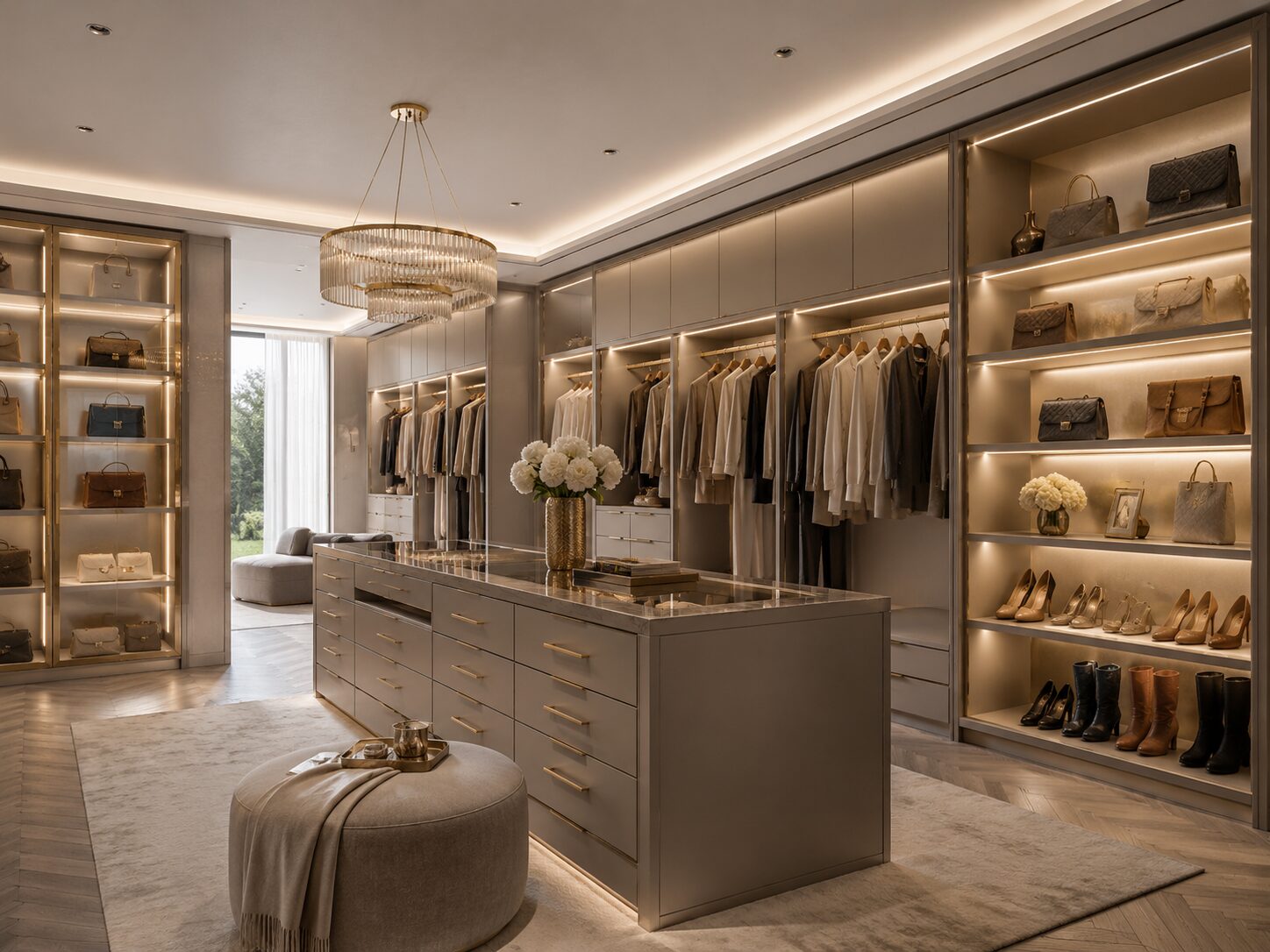
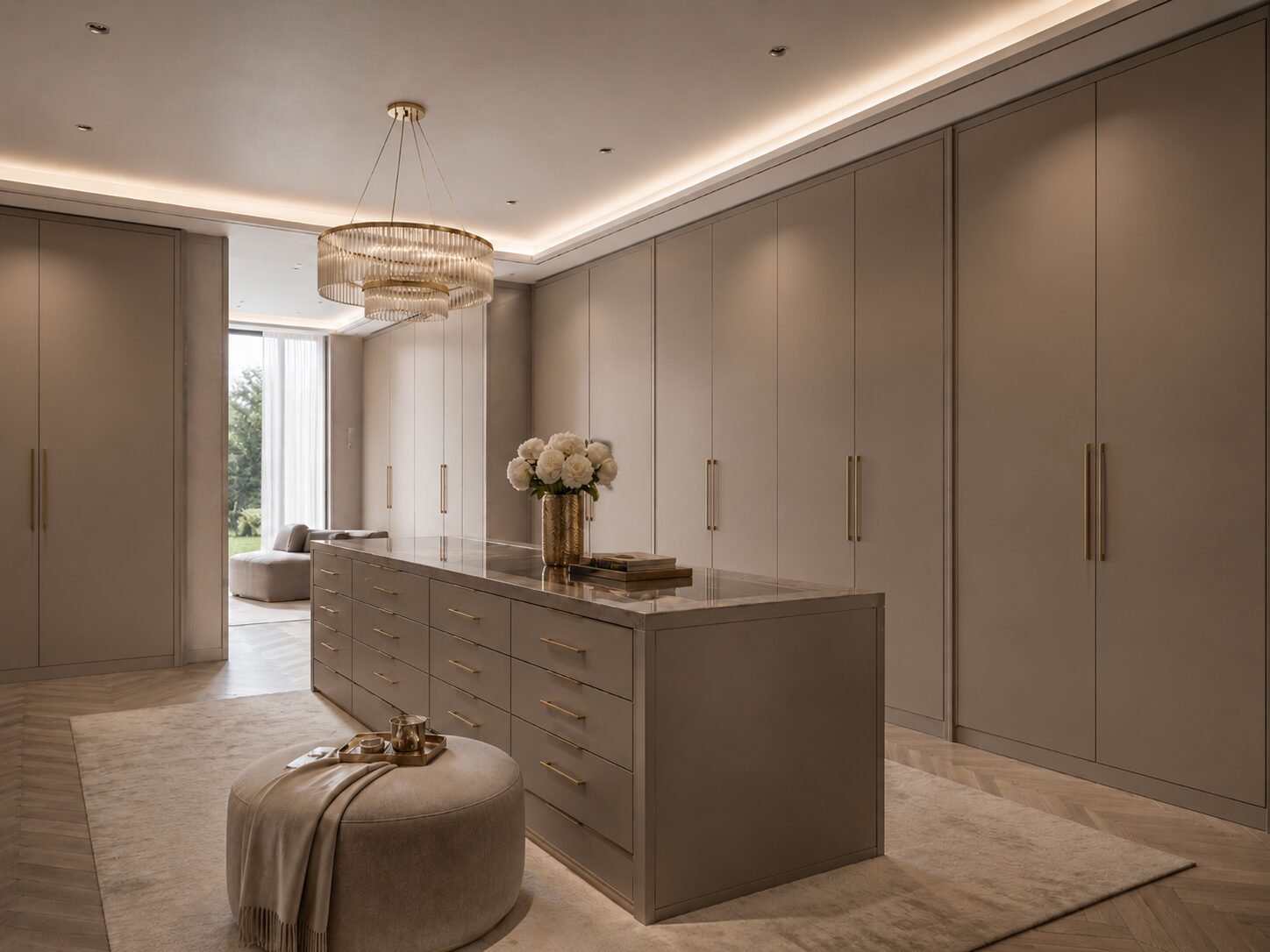
Modern Closet Design is About What to show & What to Hide
Modern closet design is not about putting everything on display.
The most refined closets are built around balance. Some pieces should be visible because they bring rhythm, personality, or ease of access. Others should be hidden because too much visibility can quickly become visual noise.
Visible
Hidden
Drawers, doors, shelves, hanging zones, lighting, and display areas each have a role.
When those roles are intentional, the closet becomes more than storage. It becomes a space that feels considered.
The most refined closets balance what is visible with what quietly disappears.
The New Luxury Is Quiet Order
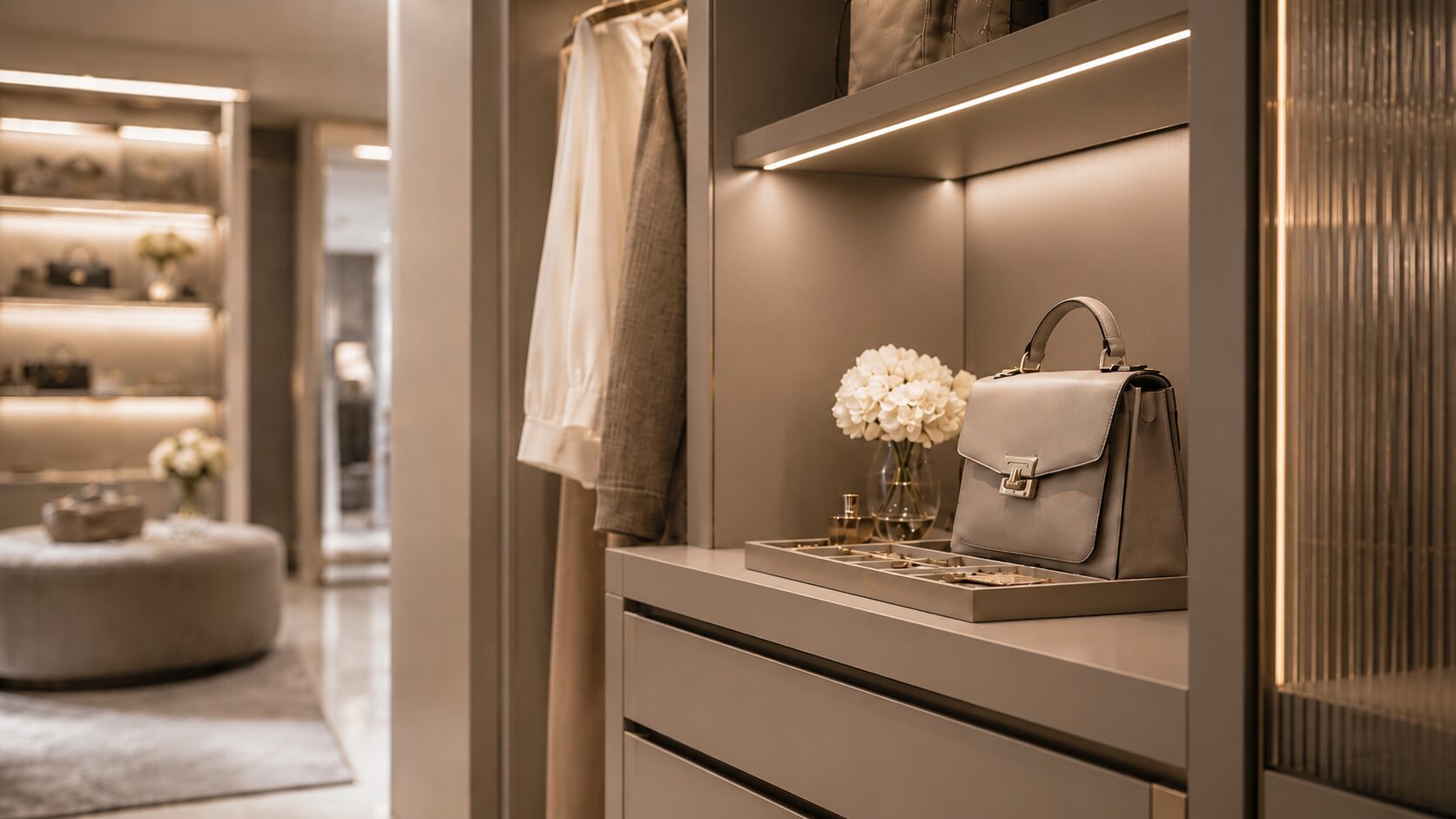
Luxury closet design is not always about scale. It is about creating a sense of calm that supports the way people live every day.
When every element has a place, the space feels lighter. When not everything is on display, what matters can stand out more. True luxury is not about seeing everything. It is about knowing where everything belongs.
A well-designed closet uses proportion, materials, lighting, and storage planning to create calm. It supports the personal side of the home without making everything feel exposed.
Calm
Composed, not crowded.
Order
A place for everything.
RESTRAINT
Not everything on display.
EASE
Designed to be lived with.
Luxury is not always about seeing everything. Sometimes luxury is knowing where everything belongs.
At Korner, we believe closets deserve the same level of planning as kitchens. Not because they need to become showpieces, but because they quietly shape how people move, dress, reset, and maintain order every day.
A closet should not be designed around storage alone. It should be designed around lifestyle.
Closets are no longer afterthoughts because daily life is no longer an afterthought.
At Korner, we see closets as part of the home’s living system, not as storage left for later.
Ready to Rethink Your Closet?
A well-planned closet can change how a home feels every day by creating better order, better access, and a calmer routine.
Luxury home storage is becoming less about adding more space and more about creating better organization. Explore how thoughtful cabinetry and purposeful storage can reduce clutter, create clarity, and make everyday living easier.
Modern kitchens are no longer shaped by one fixed planning rule. Today, kitchen storage design follows how people actually prep, cook, clean, and move through the space, creating a kitchen that feels more intuitive, organized, and effortless to use.
Quiet luxury is not about removing character. It is about creating calm through thoughtful cabinetry, restrained materials, and storage designed around everyday life. This article explores how fewer, more intentional decisions can make a kitchen feel more refined, functional, and lasting.