
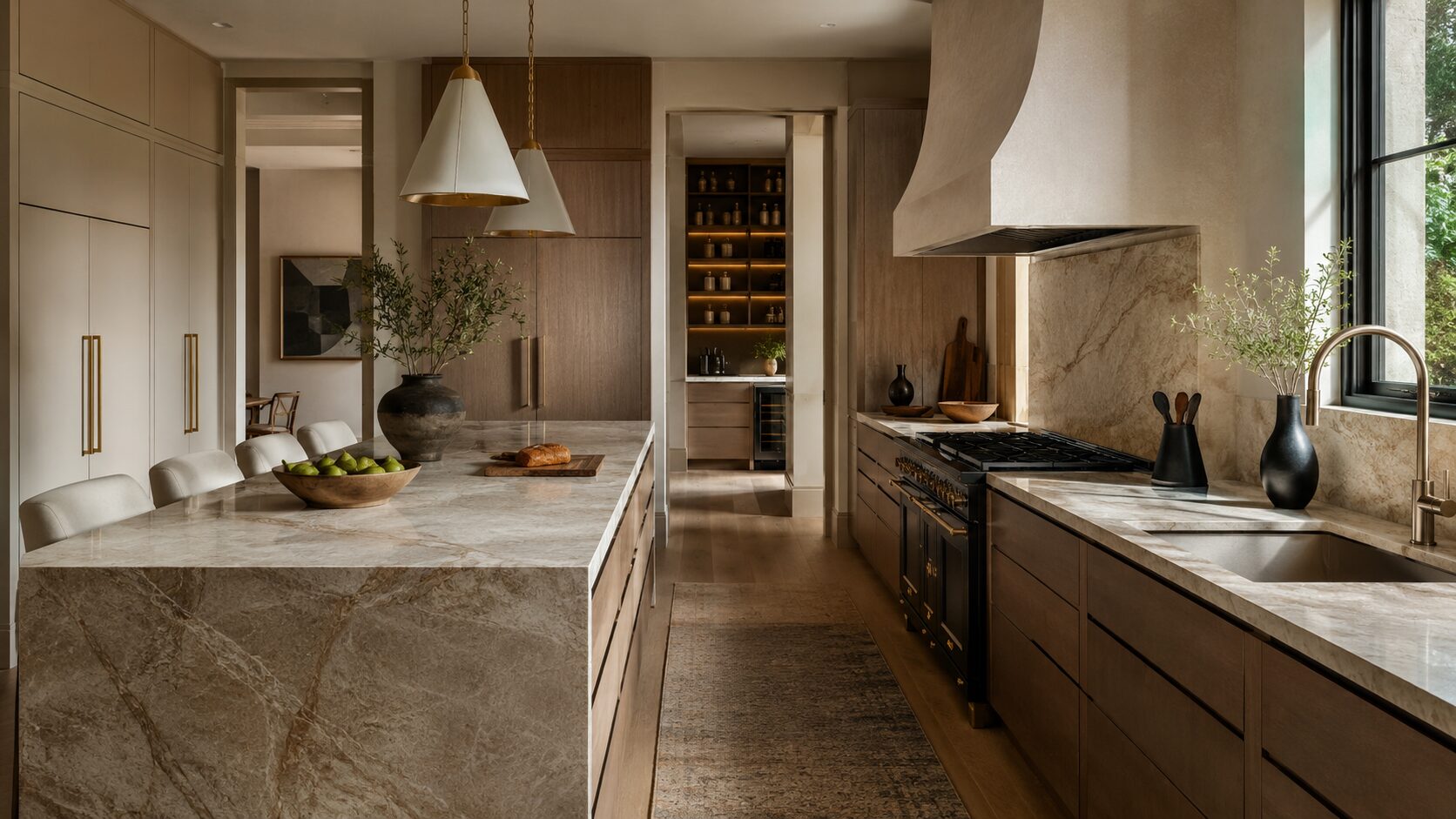
Modern kitchen storage design is no longer about fitting more into every cabinet. It is about placing what you use where you naturally need it.
By organizing the kitchen around activity zones, storage becomes more intuitive, efficient, and easier to live with.
From Rules to Zones
For decades, kitchen planning was shaped by a simple idea: keep the sink, range, and refrigerator within an efficient triangle.
That approach made sense when kitchens were smaller, more enclosed, and often centered around one primary cook. But the way we use the kitchen has changed.
Today, it is a place to prep, cook, clean, gather, make coffee, entertain, and move through together. Storage is no longer planned only around where cabinets fit. It is planned around what happens in the space, and where each activity naturally takes place.
The kitchen did not lose its structure. It became more personal.
Design Around the Reach
A well planned kitchen does more than assign activities to different zones. It considers what happens within each routine, and what needs to be close at hand when it happens.
Thoughtful storage reduces the distance between one action and the next, helping everyday movement feel more natural.
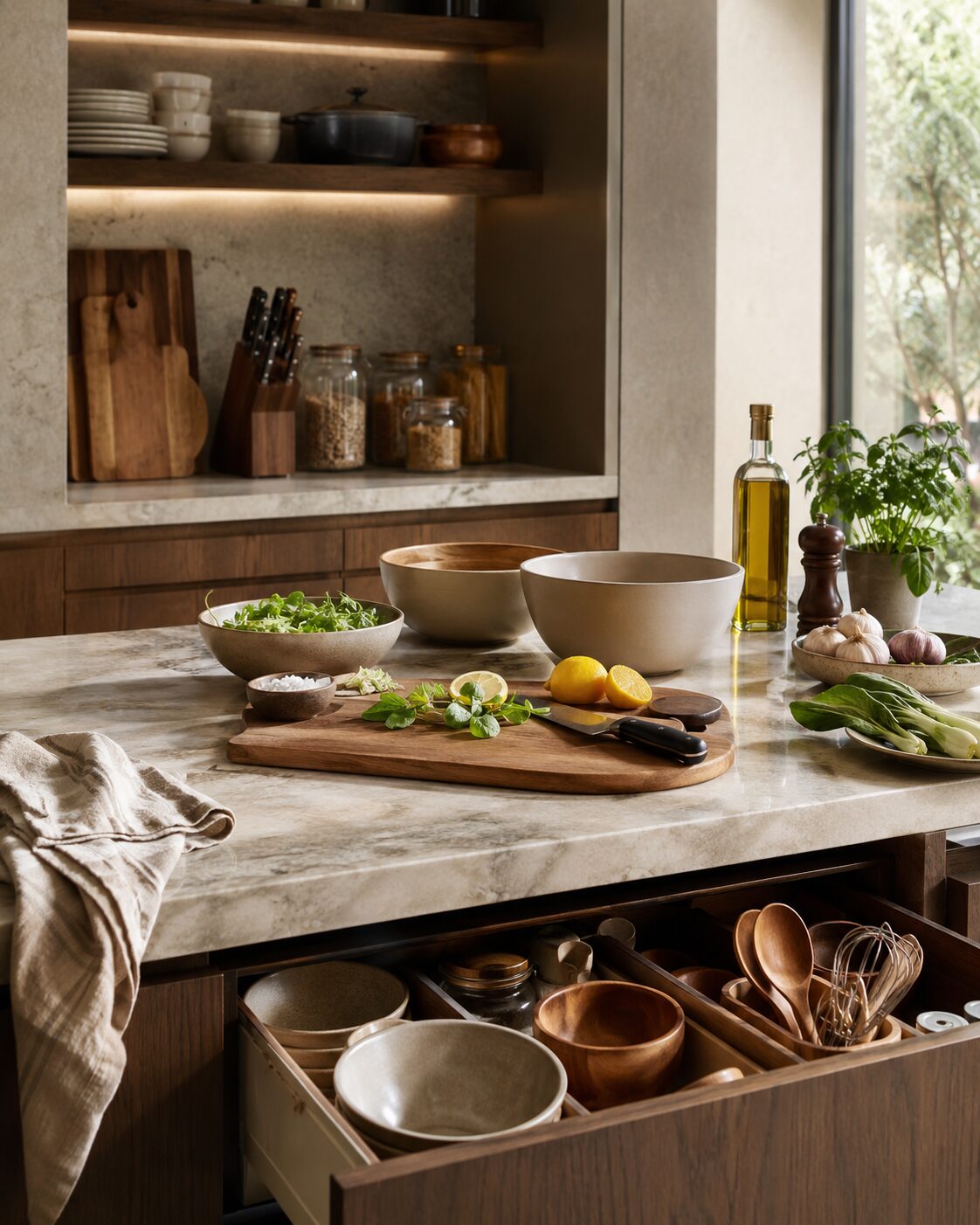
Knives, cutting boards, mixing bowls, and everyday ingredients work best when they are close to the surface where preparation happens.
Keep frequently used tools within one or two movements of the work surface.
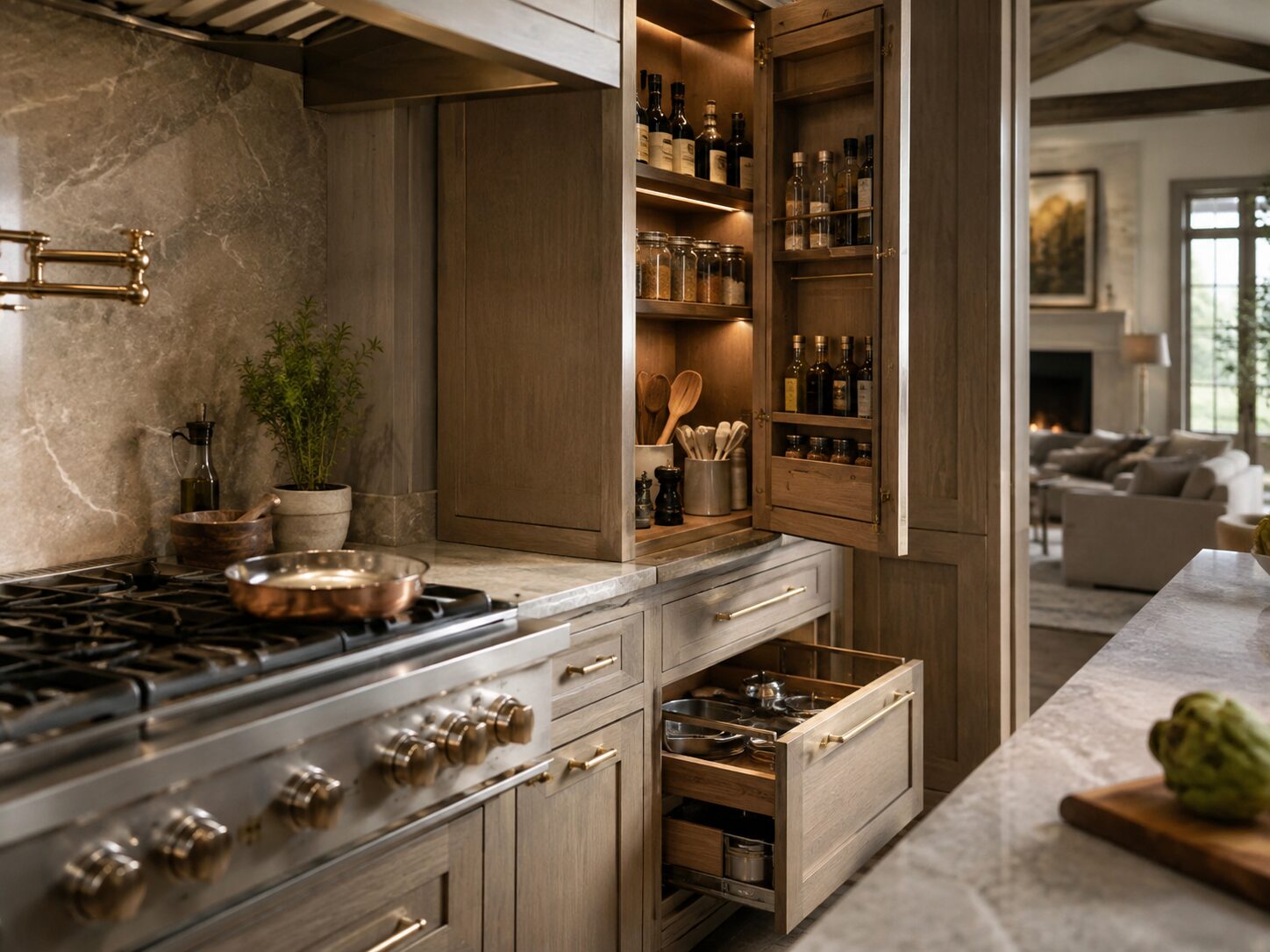
Cookware, utensils, oils, and seasonings should be easy to reach once food moves from preparation to cooking.
Place cooking essentials near the range so the routine can continue without unnecessary movement.
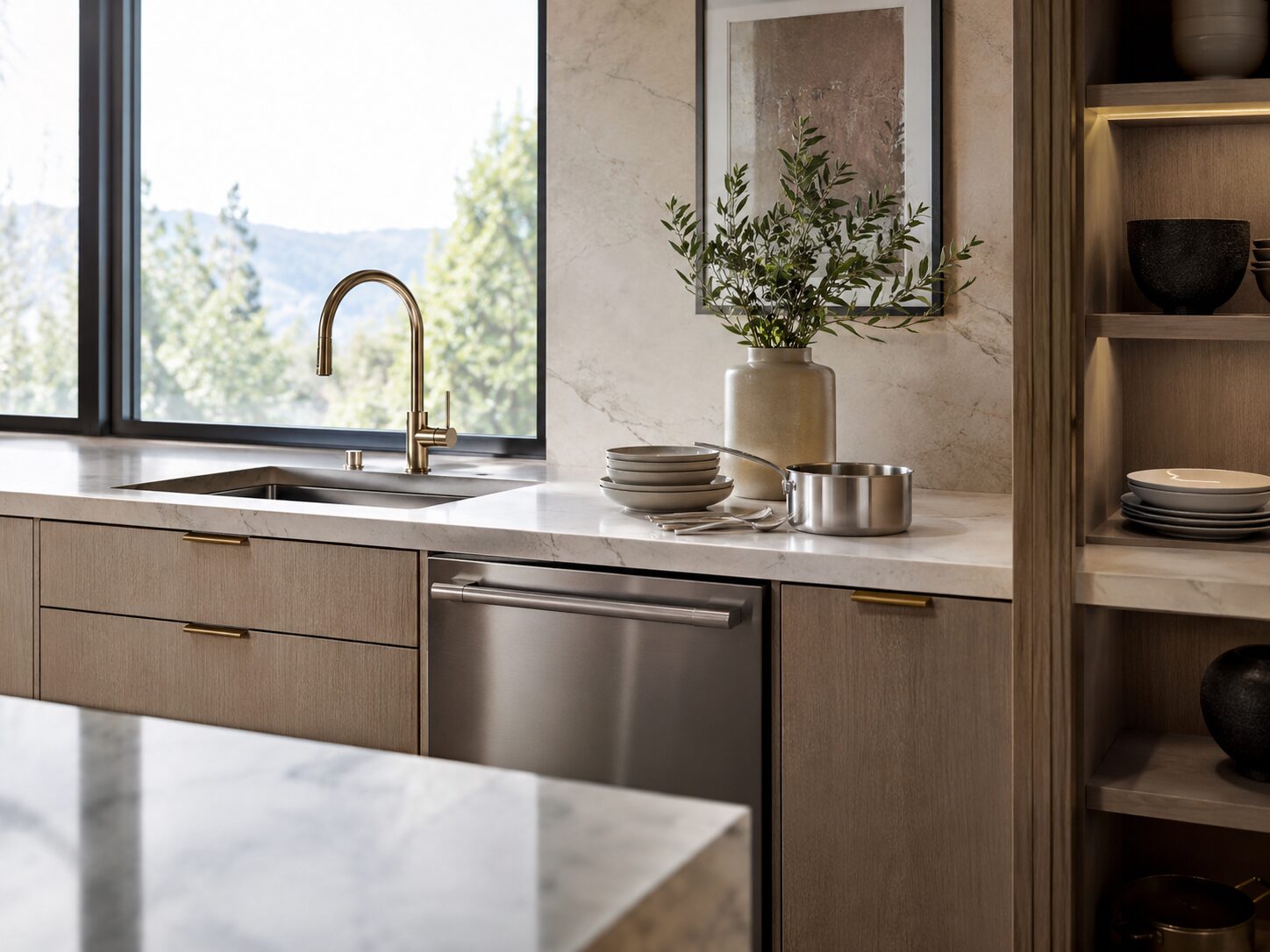
Cleanup is part of the routine too. Everyday dishes and frequently used items are easier to put away when storage is planned close to the sink and dishwasher.
Make returning items as natural as reaching for them.
Good storage shortens the distance between what you are doing and what you need next.
What You Use Most Should Ask the Least of You
Not everything in a kitchen deserves the same kind of access.
The bowl used every morning, the pan reached for every night, and the glasses used throughout the day should not require the same effort as a serving platter brought out a few times a year.
Thoughtful storage considers frequency as much as capacity. Everyday items stay close, visible, and easy to return, while less frequently used pieces can move higher, deeper, or farther away.
The result is subtle, but important: the kitchen begins to prioritize the things that shape everyday life.
STORAGE LOGIC
Storage Is Designed from the Inside Out
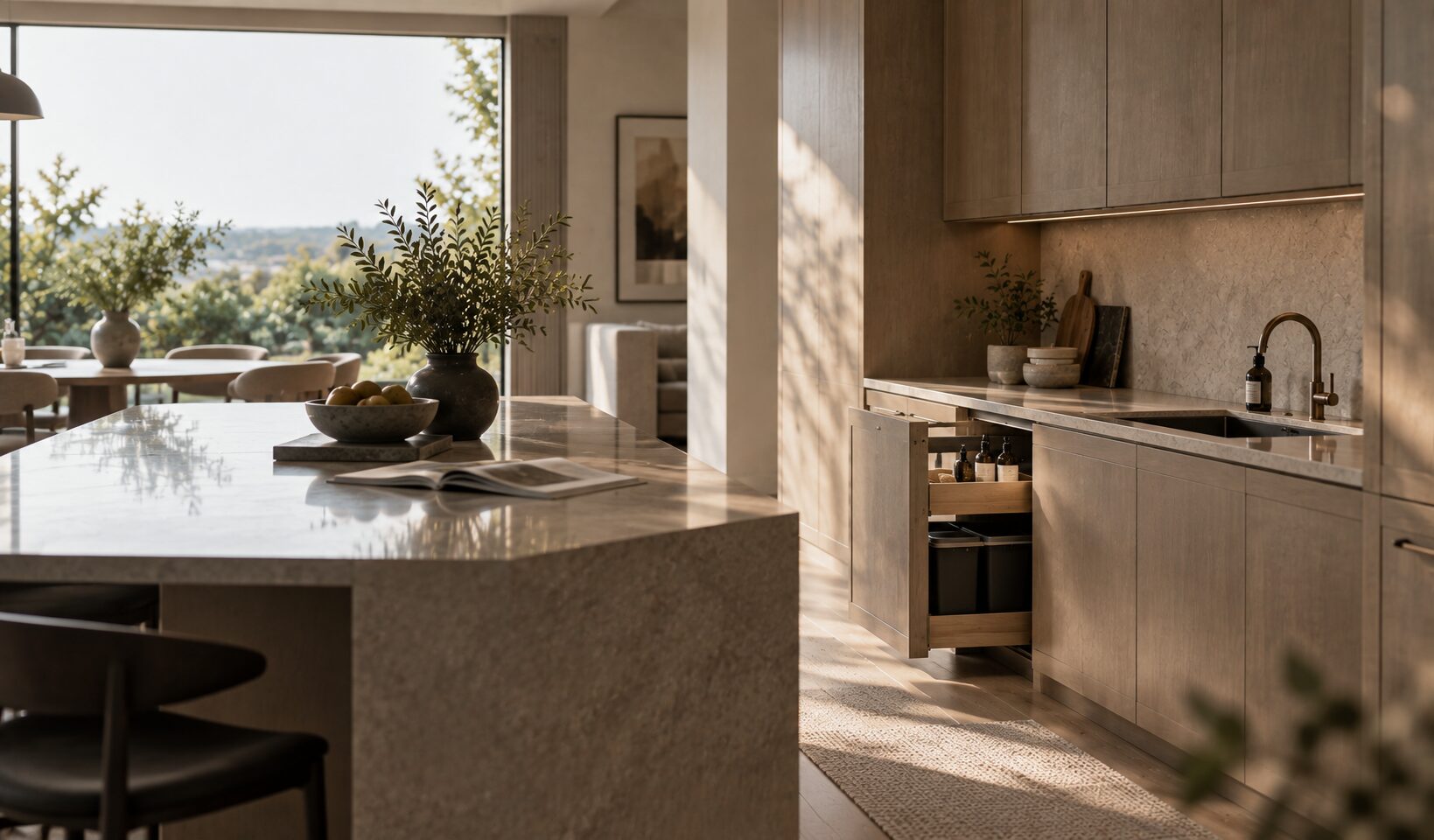
Good cabinetry is not defined only by what you see when the doors are closed. The way the interior is planned can have an even greater impact on how the kitchen works.
Vertical Tray Storage
Keeps trays, cutting boards, and baking sheets upright, visible, and easy to reach.
Cookware Organization
Pots, pans, and lids work better when each has a clear place instead of being stacked wherever they fit.
Dedicated Everyday Tools
Frequently used tools stay easier to reach when they are given a place of their own.
The cabinet begins with what needs to live inside it, not the other way around.
Beautiful storage is the result of intentional planning, not afterthought.
When Storage Works, You Stop Thinking About It
The most successful storage rarely calls attention to itself. A drawer opens where you expect it to. The pan you use most is close to the range. Everyday dishes return to a place that feels obvious.
None of these moments feels remarkable on its own. Together, they remove small decisions from the day.
The Result
A kitchen that asks less of you.
At Körner, we believe good storage should feel intuitive before it feels impressive.
The most thoughtful kitchens are not designed around how much can fit inside a cabinet. They are designed around how people move, what they reach for, and what they need to put away when the day is done.
When cabinetry responds to those everyday routines, organization becomes less visible and the kitchen simply becomes easier to live with.
Designed Around the Way You Live.
Thoughtful storage begins with understanding what happens inside the kitchen every day.