Great kitchen design goes beyond cabinetry. It considers how we move, what we reach for, and how daily routines unfold.
Now, that same thinking is reshaping modern closet design. By bringing kitchen planning principles into the closet, everyday storage becomes more intuitive, purposeful, and effortlessly organized.
Why Kitchen Design is Influencing Closets ?
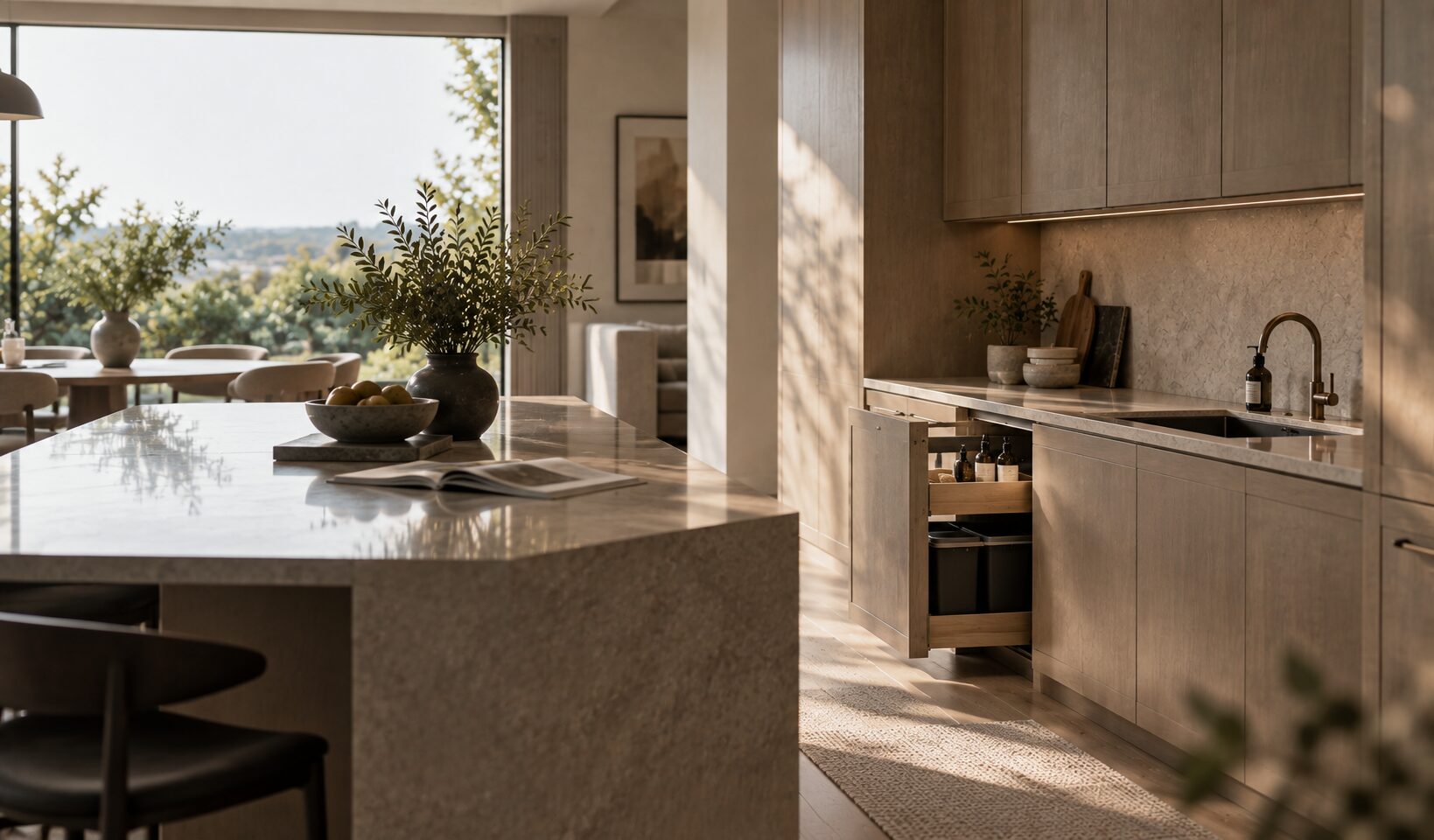
Kitchen storage has evolved beyond simply fitting more into cabinets. Dedicated spaces for cookware, utensils, and everyday essentials make daily routines more intuitive.
KITCHEN
Storage organized around tasks.
CLOSET
Storage organized around routines.
THE SHARED PRINCIPLE
Every item has a place. Every space has a purpose.
Designing Closets Around Daily Routines
A thoughtfully designed closet follows the rhythm of everyday life. Rather than organizing everything by available space, it considers what we use most often and how we move through our routines.
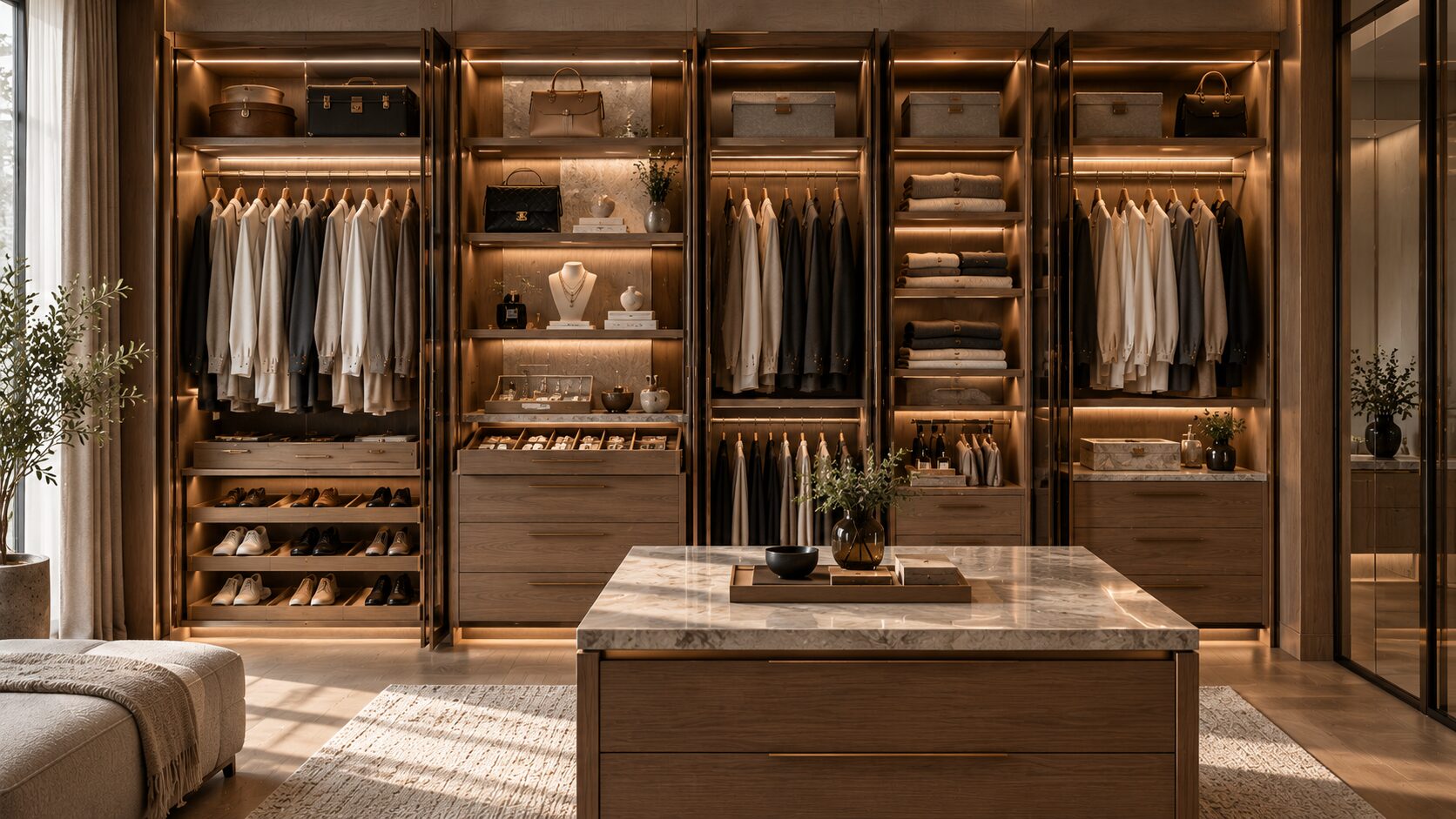
Frequently worn clothing stays within easy reach, accessories have dedicated spaces, and seasonal pieces are stored where they won’t interrupt daily use.
Keep the everyday effortless.
Frequently worn clothing and everyday shoes stay within easy reach, supporting a more natural daily routine.

Bringing Kitchen Cabinetry into the Closet
The influence of kitchen design goes beyond layout. The same thoughtful cabinetry details that make kitchens easier to use are finding their place in modern closets.
Integrated drawer organizers and tailored compartments create dedicated spaces for everything from folded clothing to delicate accessories.
CRAFTSMANSHIP
Precision in Every Detail
Tailored compartments bring structure to smaller essentials without compromising the design.
FUNCTIONALITY
Designed for Daily Use
Accessible drawers make everyday storage more practical and intuitive.
A Consistent Design Language Throughout the Home
The connection between kitchens and closets extends beyond functionality. Cabinetry finishes, door styles, and thoughtful detailing can create a sense of continuity between spaces.
A shared design language doesn’t mean every room needs to look the same. It’s about carrying familiar materials, proportions, and craftsmanship throughout the home while allowing each space to serve its own purpose.
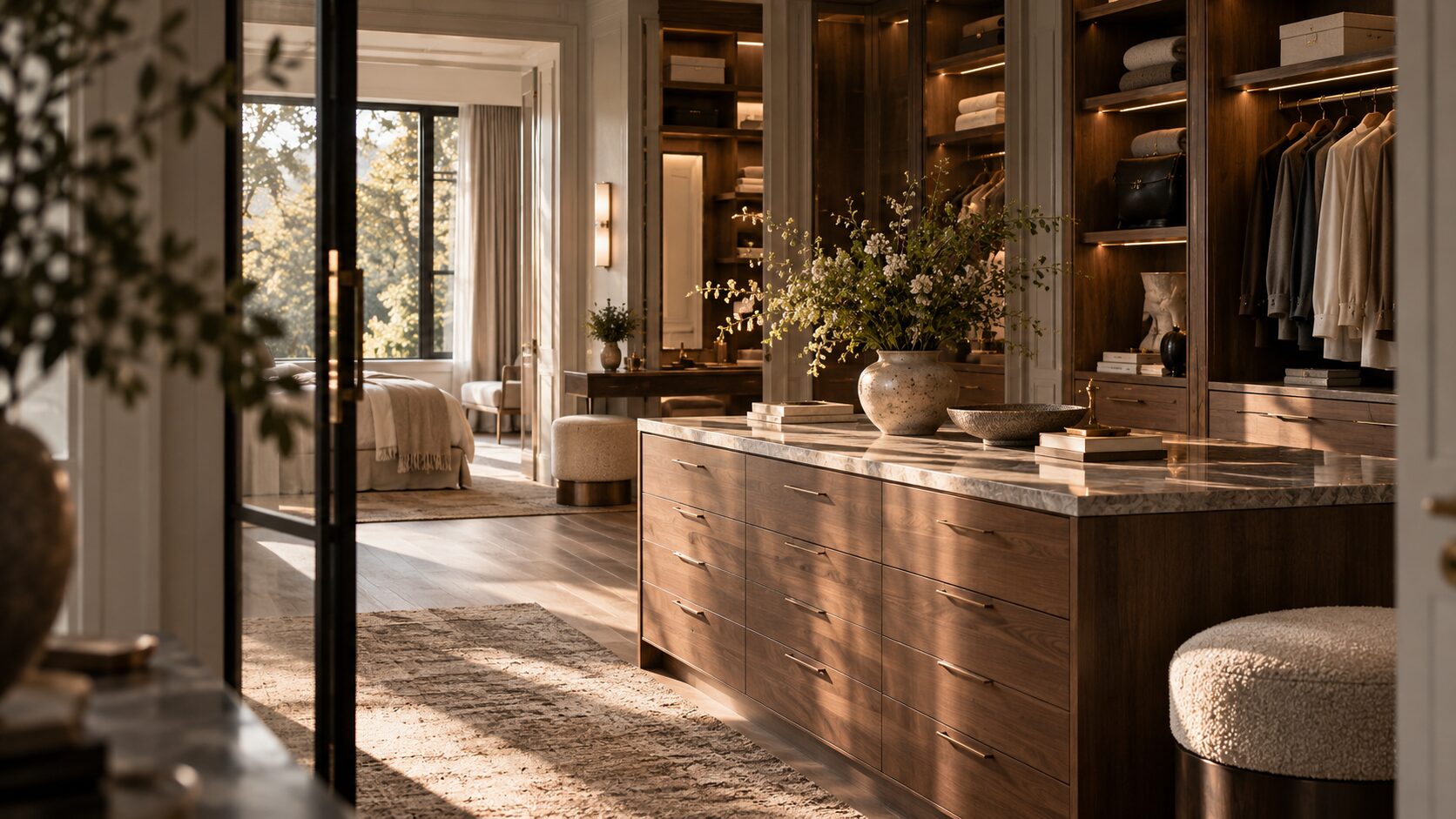
Warm wood tones and tailored wardrobe panels.
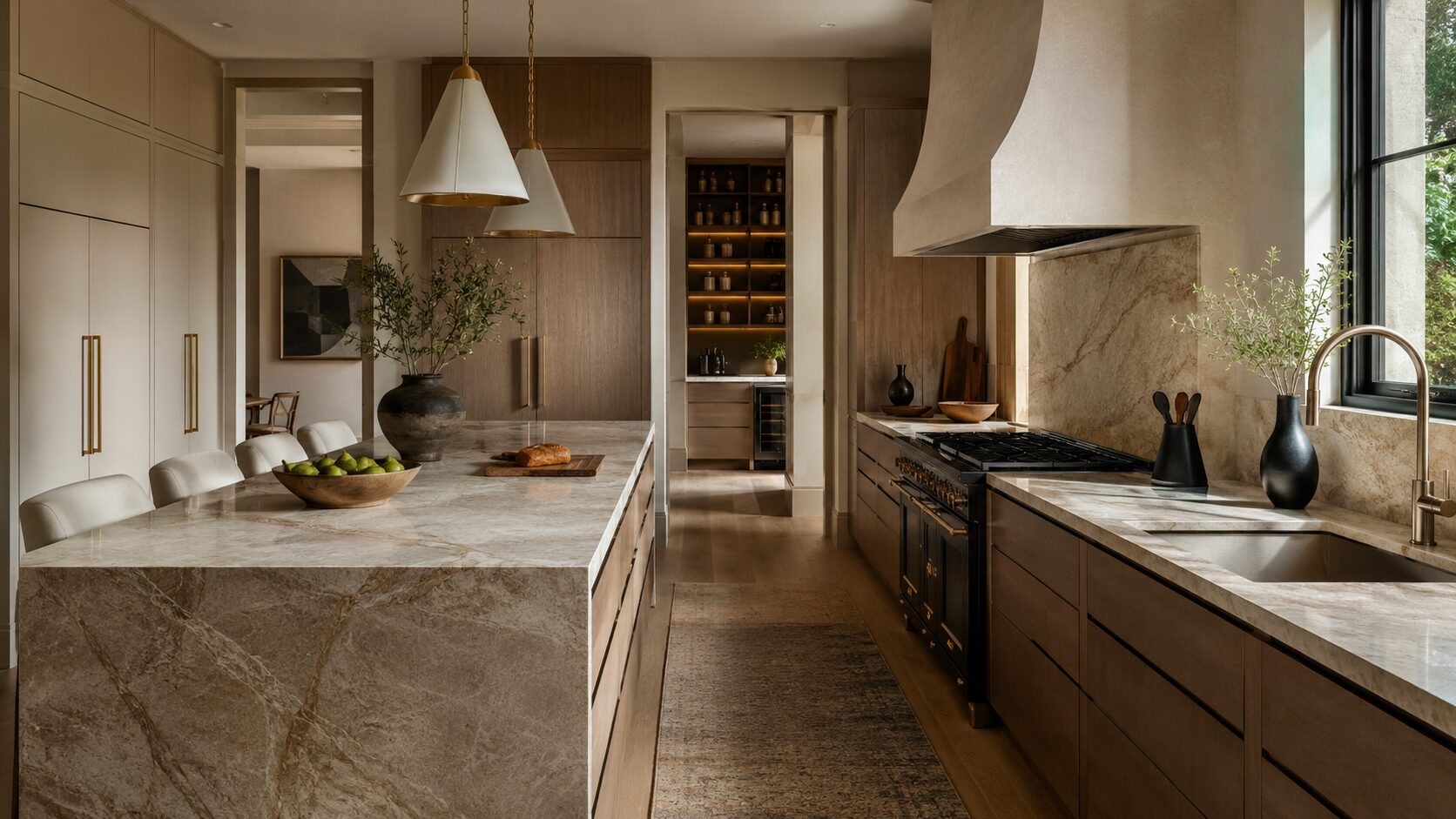
Coordinated wood cabinetry and island detailing.
A Shared Material Palette
Natural wood tones bring warmth and visual continuity to kitchens and closets, allowing each space to maintain its own character.
Seamless wardrobe panels with integrated storage.
Streamlined cabinet fronts with minimal detailing.
Clean Lines Across Spaces
A shared approach to simplicity creates visual continuity, even when each space serves a different purpose.
Illuminated glass wardrobes showcase clothing and accessories.
Glass-front cabinetry brings curated dinnerware into view.
When Storage Becomes Display
Glass, light, and subtle variations in metal frames and glass styles create a shared design language, turning everyday storage into a refined display.
Designing Beyond the Room
Great cabinetry design isn’t defined by the room it’s in, but by how naturally it supports everyday life.
As kitchens and closets share thoughtful planning, refined materials, and purposeful storage, the focus shifts from designing individual rooms to creating a more connected home.
The best spaces don’t compete for attention. They belong together.
At Körner, we believe great cabinetry begins with understanding how people live, not simply where storage belongs.
Whether in a kitchen or a closet, thoughtful design brings together function, craftsmanship, and materials in ways that feel natural to everyday routines.
The goal isn’t to make every room look alike. It’s to create a home where each space feels distinct, yet connected.
Explore More
Beyond
the kitchen.
Explore how thoughtful cabinetry brings function and character to the modern closet.